Sense
Most equipment is instrumented for control, not for understanding. A motor reports that it is running. A cooling unit reports a supply temperature. Those readings say whether a machine is doing its job at this moment. They say very little about whether it will still be doing its job next month.
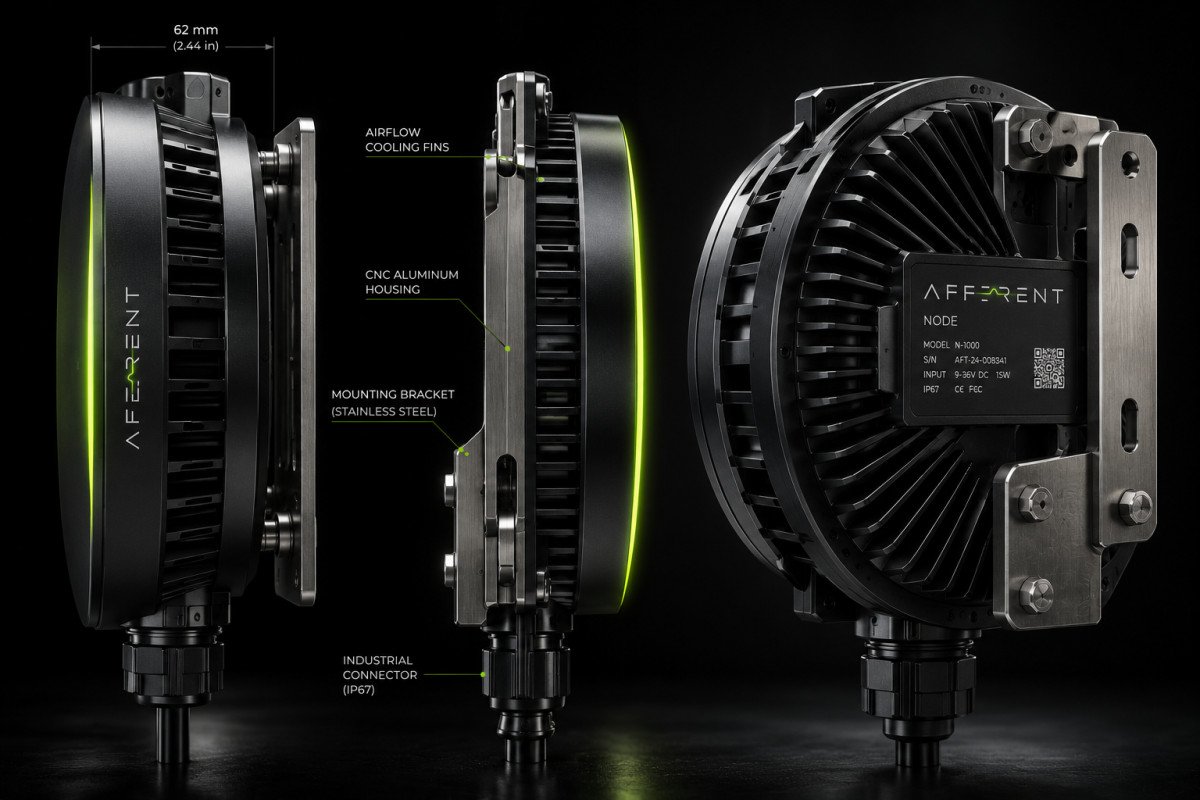
NODE is designed to observe a different layer of information: the physical side effects of operation. A machine in service produces vibration, sound, heat and electromagnetic activity whether or not anyone is measuring them. Those side effects change as components wear, loosen, overheat or fall out of alignment, and they usually change well before the control system registers a fault.
The sensing modalities planned for the NODE family include:
- Vibration, the classic indicator of mechanical condition in rotating equipment.
- Acoustics, including sound that a person standing beside the machine could not hear or would not notice.
- Temperature and thermal signatures, which reveal friction, electrical resistance and failing cooling.
- Environmental conditions such as ambient temperature and humidity, which explain why a reading moved.
- Electromagnetic signatures and electrical behavior, which reflect what is happening inside motors, drives and power equipment.
- Movement and operating patterns, which describe how the asset is being used.
Not every NODE will carry every sensor. The point is the combination. One signal is a clue. Several signals that move together are evidence.
Understand
A sensor that only streams raw data moves the problem somewhere else. High-frequency vibration and acoustic data is heavy, and most of it describes a machine behaving exactly as it did yesterday. Sending all of it to a data center is expensive, slow and often impossible on an industrial network.
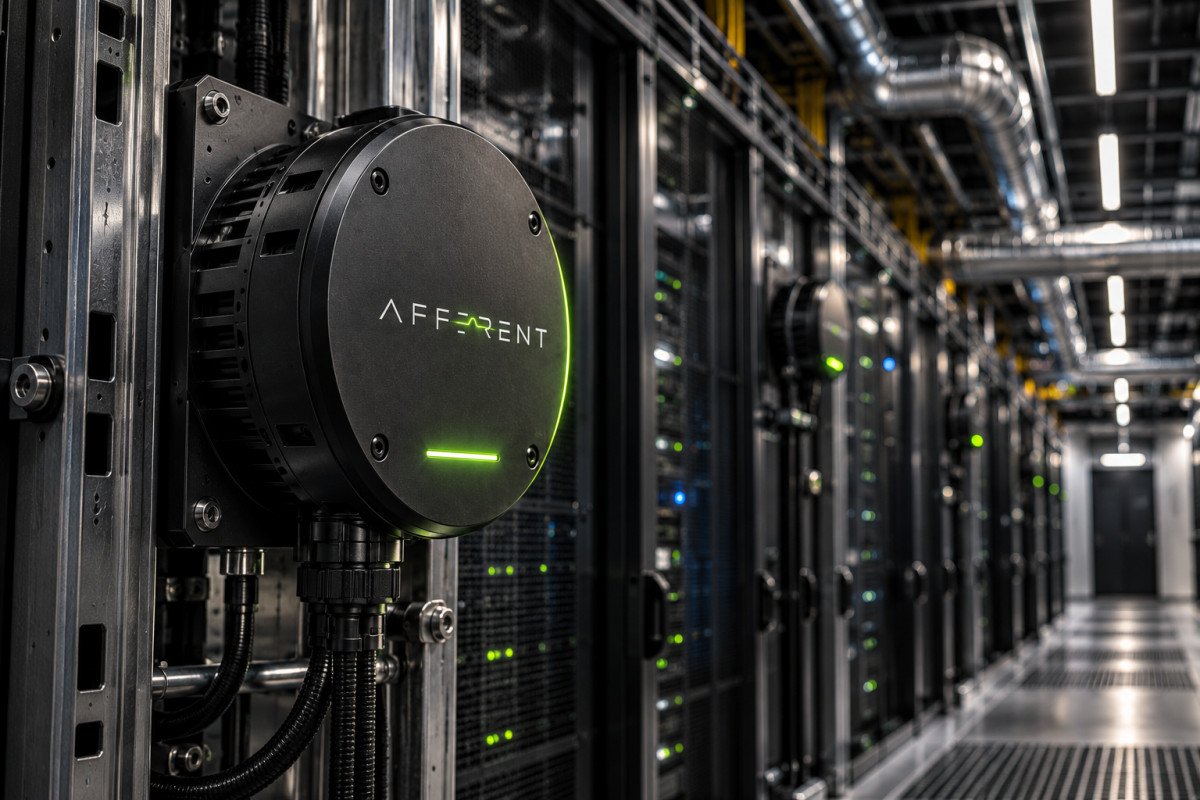
NODE is built around edge intelligence. Analysis is intended to run on the device, beside the signal, so the device can learn what normal looks like for the specific asset it is mounted on and can recognize a departure from it. What leaves the device is meant to be a finding and the evidence behind it, not an undifferentiated stream.
Processing at the edge also means the device can keep working when the network does not. A NODE that loses its connection should keep observing, keep analyzing and report when the link returns. Read more about edge AI at AFFERENT.
Connect
A single device understands a single asset. The value grows when devices are connected. NODE is designed to communicate with AFFERENT Cloud, where findings from many devices are brought together into a view of a facility, a fleet or a portfolio of sites.
That connection is designed to run in both directions. Findings travel up. Improved models, configuration and device management travel down. Security is treated as a design requirement at each step, because a device attached to critical equipment must never become a way into the network it sits on. Read our security approach.
Learn
The long-term thesis behind NODE is larger than any one installation. If the same class of pump degrades in recognizably similar ways across hundreds of sites, then what is learned at one site can inform every other. We call the resulting body of knowledge Machine Health Intelligence.
This is an ambition, stated as one. Every deployment has the potential to deepen our understanding of machine behavior. We do not claim a dataset we have not built or an accuracy we have not measured.
Act
An observation is useful only if it changes what someone does. NODE and AFFERENT Cloud are being designed to deliver findings in a form a maintenance or operations team can act on: which asset, what changed, how confident the system is, how much time is likely to remain and what to inspect first.
The intended delivery paths are alerts, maintenance workflows and APIs that connect to the systems a customer already runs. The goal is to add understanding to an existing operation, not to ask a team to adopt another screen.